


Despite its proud heritage and reputation as one of the great hubs for its eponymous trade, the Jewellery Quarter is in a period of change with its main industry under enormous pressure from a wide variety of angles. Birmingham Business editor HENRY CARPENTER met with a handful of business leaders at the School of Jewellery to discuss the state of the health of the trade and the district as a whole.
The panel
Norma Banton, founder of both the Silverfish Jewellery Company, founded in 2002, and Masterpiece Academy, established in 2021 to help break down barriers for young people from marginalised local areas wanting to enter the jewellery trade.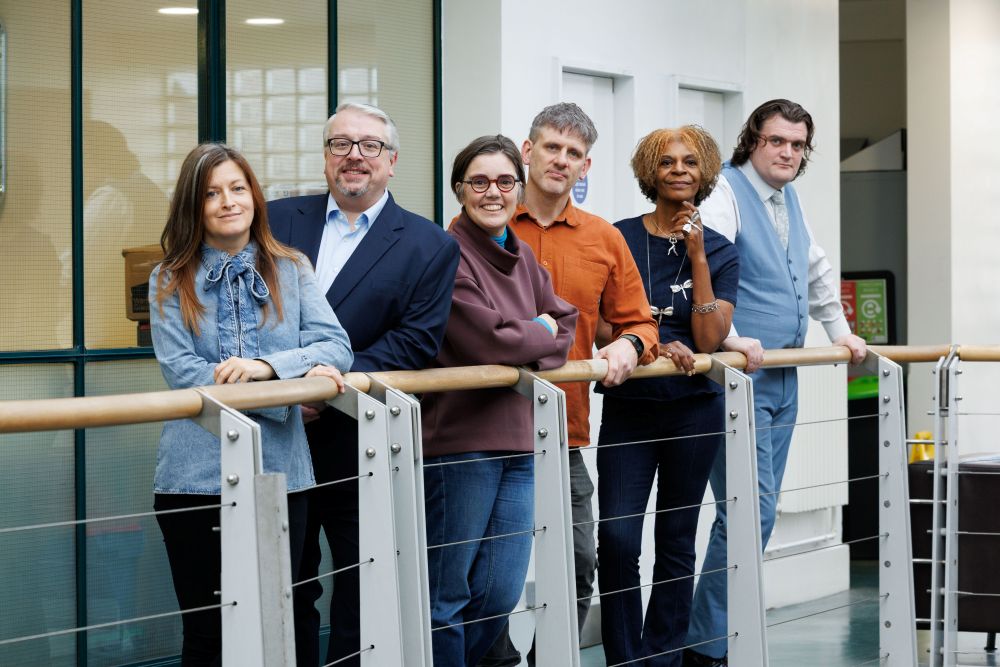
Giles Knox, managing director of Firmin and Sons, manufacturers of metalware, primarily for the military or police. Established in 1655 – and now part of the Kashket group – it is the oldest privately-owned manufacturer in the UK.
Rachel Morrish, of RE Morrish, a second-generation manufacturing jeweller on Vyse Street, manufacturing silver and gold jewellery, making over 7,000 different products.
James Newman, of James Newman Jewellery. A former student of the School of Jewellery, he set up his own jewellery design and manufacturing business 30 years ago.
Rebecca Skeels, course director at Birmingham City University’s School of Jewellery which was set up in the 1980s and is the largest specialist school in the world for jewellery.
Alex Wardle, of A Wardle & Co, manufacturers established in 1952 making a wide range of items from brass and bronze parts, badges and button fronts all the way through to fine jewellery.
Henry Carpenter: Alex, is the Jewellery Quarter in good health?
Alex Wardle: I think it’s pretty much fifty-fifty at the minute. It has changed a lot since I was a kid and I’ve been around the Jewellery Quarter since I was born.
There are very specific problems now in terms of the trade itself, problems that haven’t really been addressed since the 80s and the 90s which is when the local communities surrounding the region were marginalised. These local areas used to provide a lot of the workforce, and these were skilled people.
So I think that the 80s and the 90s were a problem area and it all dragged forward really.
There are also a lot of housing issues in terms of potentially pushing out the trade itself – the council didn’t protect the buildings or the trade when it had the opportunity many years ago.
Rachel Morrish: I’ve been working quite closely with the council over their issues of selling properties since about June of last year.
We’ve just recently had a big meeting with the council where we're now looking at getting building protection in place so that the buildings that are currently workshops and for the jewellery trade are hopefully going to get protected, like Hatton Garden and Savile Row in London have where they’re like cluster businesses.
We don’t know whether the council will carry on selling properties but the protections should be in place which means that if somebody buys a trade-related building, they can't just turn it into apartments. They will have to keep it as the uses are, and that would hopefully give us protection that we haven’t had before.
We’ve also set up an organisation called The Jewellers of the Jewellery Quarter with the NAJ [National Association of Jewellers]. This is about people starting to come together, talking about problems and actually being more proactive rather than everybody burying their heads in the sand and not communicating.
We can be quite insular and I think moving forward we’ve got to work together, and in my dealings with the council all of sudden they’ve gone oh, we can’t just do what we want.
And so I think moving forward, we will come together and start to do better things in the Jewellery Quarter. The World Craft City status, for example, is exactly what’s needed but we must start telling the world about it – we need as a collective to come together and say this is unique, not just to the UK but to the world, and we’ve got so many skills, so much to show everybody and also to pass on to future generations. What we have is actually really important and very special and very unique.
HC: Is there a sense of pride that you’re conducting your business in a truly unique and remarkable district, not only in Birmingham, but in the UK?
RM: Yes I think so, but I think we need to get better at collaborating and stop feeling that we’re in competition with each other because we’re not. As a collective, we can do more and bring more business to us all, but we just need to become better at working together and telling the world what we are. The Jewellery Quarter brings more money into the city’s economy than the airport, for instance, and that’s quite a big achievement.
Rebecca Skeels: Also people don’t ask for help, often because they are all busy.
I think when you start asking for help, and when people get together and discuss, then they can support and help each other more. There is a lot of goodwill out there with people very willing to help.
Giles Knox: I’ve always said that for us the competition isn’t the people down the street or the other company in the Jewellery Quarter. It’s someone who’s going to take an order and send it all to be manufactured in China or India or Macedonia.
I think there is some protection for precious metal work, with concerns about insurance and shipping meaning it’s less likely to be made overseas.
And if the customers are only judging on the price and aren’t educated in what they’re getting for their money, they’ll send the whole order over to someone who die-casts in China.
RM: I think the end consumer does need to be made aware of British manufacturing and support British work. I sell that to my customers but I’m not always sure they sell it to theirs. If a diamond ring is made in Birmingham’s Jewellery Quarter they ought to be told about it.
Norma Banton: I think there’s more that the council could do with promoting individual businesses. When I first opened my shop in 2004, there was an information centre on that corner and that was great because people would come down to my shop all the time.
It’s just a small thing to have an information centre but it meant a lot because the people who worked there knew all the businesses and they knew where to send people, especially for retail shops.
RS: What’s so good about the Jewellery Quarter is that every bit of the industry is here. It has got the retail, the training, the support for the training, the manufacturing, the insurance companies, it’s got the biggest companies and the smallest companies, all in a very small amount of space. The hard thing is getting the awareness out there.
GK: There really needs to be a critical mass of companies with specialist capabilities.
Also if there’s only one person who has a specialist skill and they don’t want to train anyone, you’re going to have a problem. We need those skills to be transferred.
HC: Let’s talk about the next generation. Are you seeing an appetite to get involved with the trade increasing or waning?
RS: I’ve been in the university for six years and the courses have got bigger. However. craft courses in universities aren’t supported in the same way across the country as they were probably 10 years ago.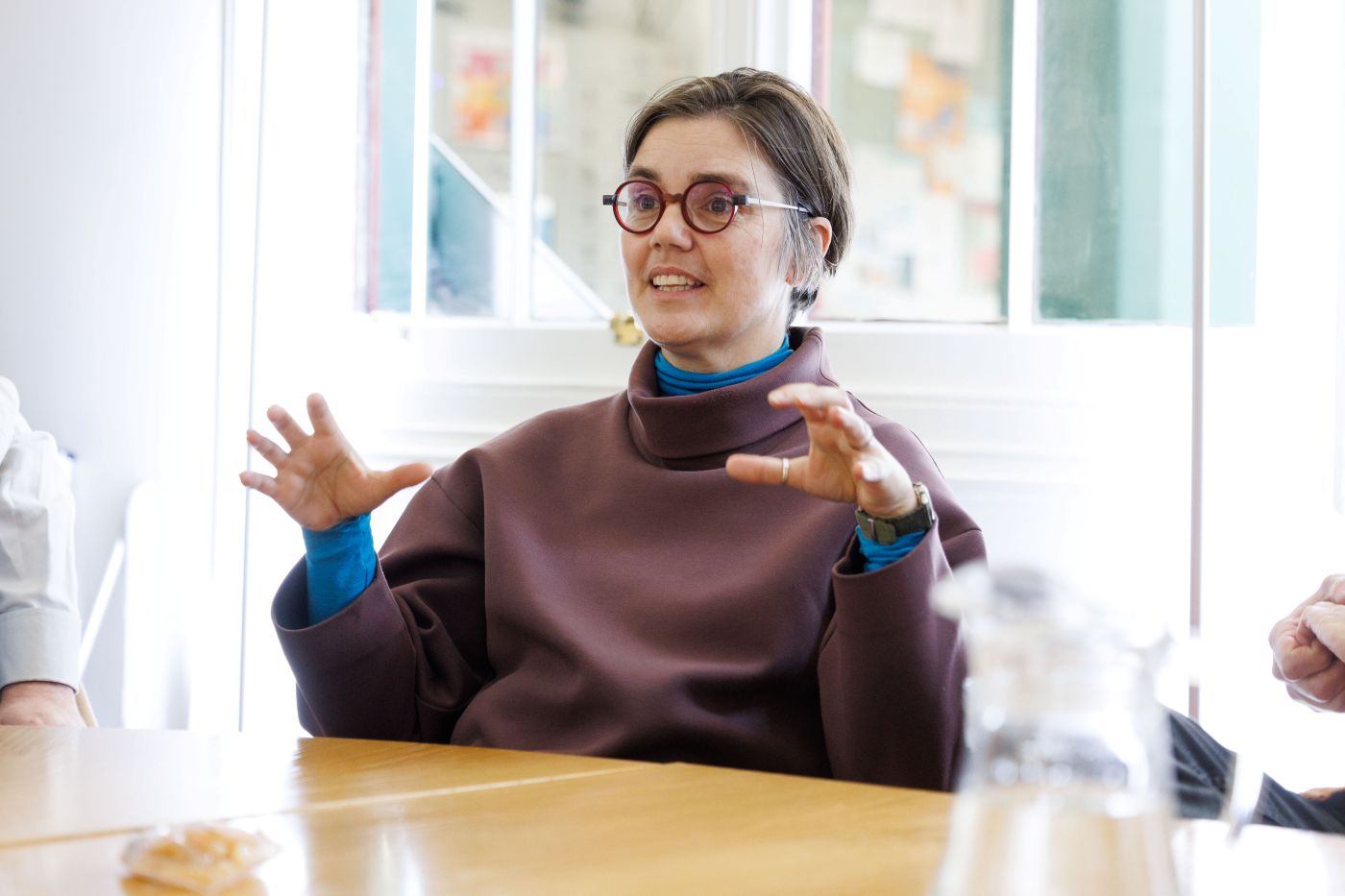
We’re lucky in this university because we’ve got multiple courses. Also, because we’re in the Quarter we do have amazing support from the industry. The students get experience which is great because a three-year degree isn’t quite enough on its own to get the amazing skills they need in one area. They have to have experiences in the industry in the JQ to give them the confidence to work in it.
They certainly have a passion for the sort of industry that they want to go in to, but it doesn’t have to just be the making – some are into designing, some of them in retail, some of them in curating, we’ve had students go and work in the theatre and making bicycles with some of the jewellery skills. KTPs [knowledge transfer partnerships] are also very useful.
GK: We had an KTP with BCU which looked at our product range to try to modernise our manufacturing methods, which was very successful.
The issue we’ve had is that young people want to be creative and do things with their hands, but what we want is to make a thousand helmet plates and the thousandth to look like the first. That’s not the sort of thing that people go to university to study and it’s been very hard to get manufacturing apprentices.
RM: I think the NAJ are also looking at apprenticeships and getting back to how it probably was 20, 30 years ago. You could get an apprenticeship whereby you attend college two days a week, and are in a job for the other three. As a manufacturing company, we’ve looked into it and it’s very difficult at the moment. So I think we need to really try to get that back to how it was.
NB: Masterpiece Academy is only small with just six benches, so we can only have six students at a time, but that does mean that we can give them that personal attention.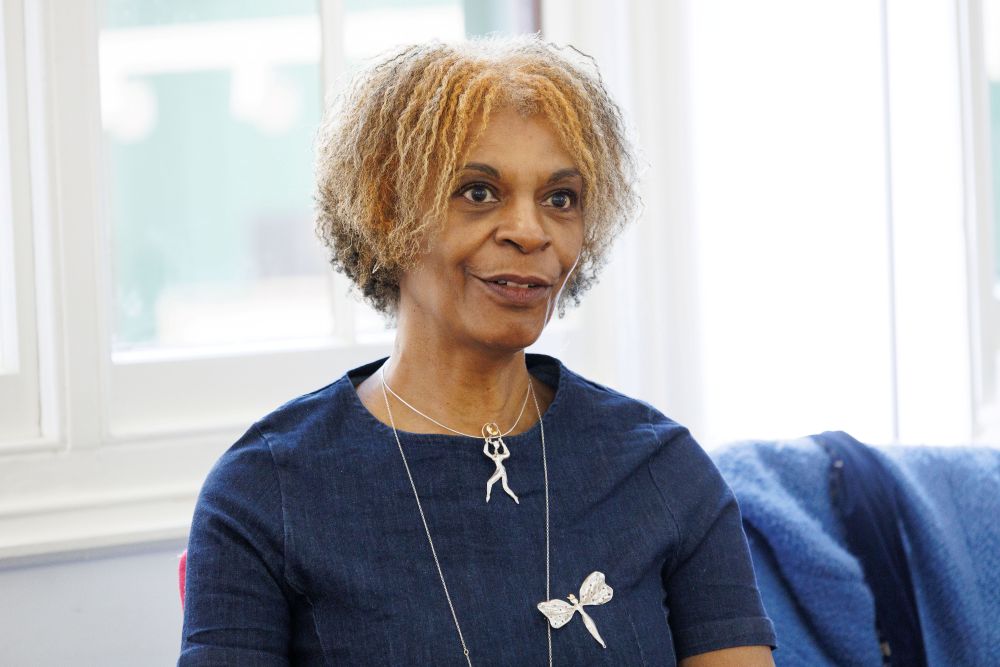
So, when we started Masterpiece Academy, I really wanted it to be culturally relevant by helping those in marginalised communities. We started planning in 2020 in the aftermath of the George Floyd moment and the Black Lives Matters movement, and I think that caused a lot of organisations to look within themselves and ask what the systemic barriers are that prevent people from local, marginalised areas from coming into the trade.
So we set up Masterpiece Academy to address those issues. Most of our young people who want jobs have got jobs. These are young people who wouldn’t have considered the trade had they not stumbled on Masterpiece Academy. It’s been a huge privilege so I hope we continue to get funding so we can carry on opening doors for more young people who want to come into the trade.
James Newman: It’s about opportunity. From my own experience, I was a kid from a working-class background in South Yorkshire but instead of mining or heavy industry, I was creative and went to art college. I was introduced to jewellery and just found it amazing.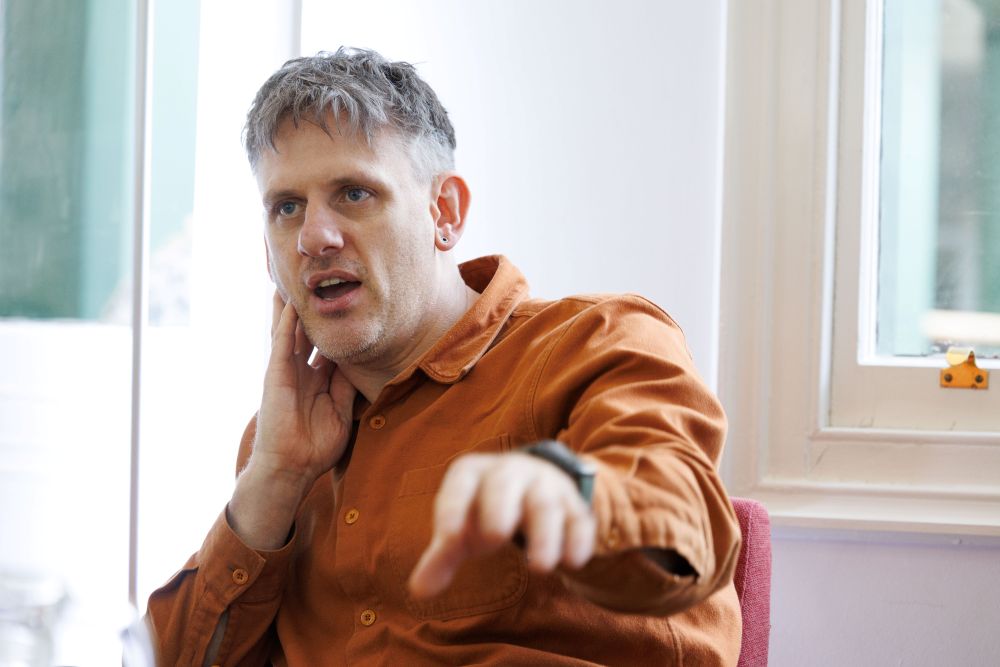
I was hooked by the creative aspect of it. I like the graphic aspects of design. I like the fact that there was a workshop with big hammers and fire and I could play around, and it quickly became apparent to me that I could consider making something that had some kind of tangible worth.
When I graduated in the 1990s there was that kind of next step, there was an incubation space. There would be a group of us with some benches and someone on a Friday morning would come in and say right, how are you going to make what you do a business. That in its absolute bare essence, was what got me into business.
I had a workshop for 12 months which was funded. I had someone I could speak to. I applied for some funding from The Prince’s Youth Business Trust, we did trade fairs and we would meet customers. That is how I got started.
But at that point, there were opportunities for graduates to leave this school and rent a workshop from the council for a negligible rent. Three of us got together, rented a workshop, and within 18 months of me starting out I employed someone for the first time. A couple of years later I got to a point where I could employ two people and ended up in a shop.
RM: This is something that I’ve started to talk to the NAJ about that. We need a space where people go when they finish their training and talk to them about how actually do you do your accounts? How to go to a trade show and just help people to find the next step.
It isn’t there at the moment, and it’s something that we definitely need to work on.
JN: It’s got to be made much easier for people to rent. If graduates can get a workshop or space for a very reasonable rent to get them started, perhaps rising incrementally, and if they are given opportunities like this, then this area could and should rise again.
HC: Thank you all very much.

Sagar brings extensive experience
Corporate tax specialist appointed
Economic report reveals figures