


Matthew Bott assesses the numerous reasons why the Jewellery Quarter deserves its reputation as a truly unique district with a remarkable heritage and a potentially golden future.
Cities across the world have an historic district in or close to their city centre. Seasoned travellers know that these often are the best places to stay, with a more neighbourhood vibe to the cafes, bars and restaurants when compared with their downtown counterparts. The Jewellery Quarter is one of those places.
This part of Hockley is Birmingham’s original creative quarter, with goldsmithing traced back to Roger Pemberton in 1553. It came into being properly in the mid-1700s as the Colmore family moved out of their New Hall Manor and started to carve their estate up into the Georgian streets of housing we see today. 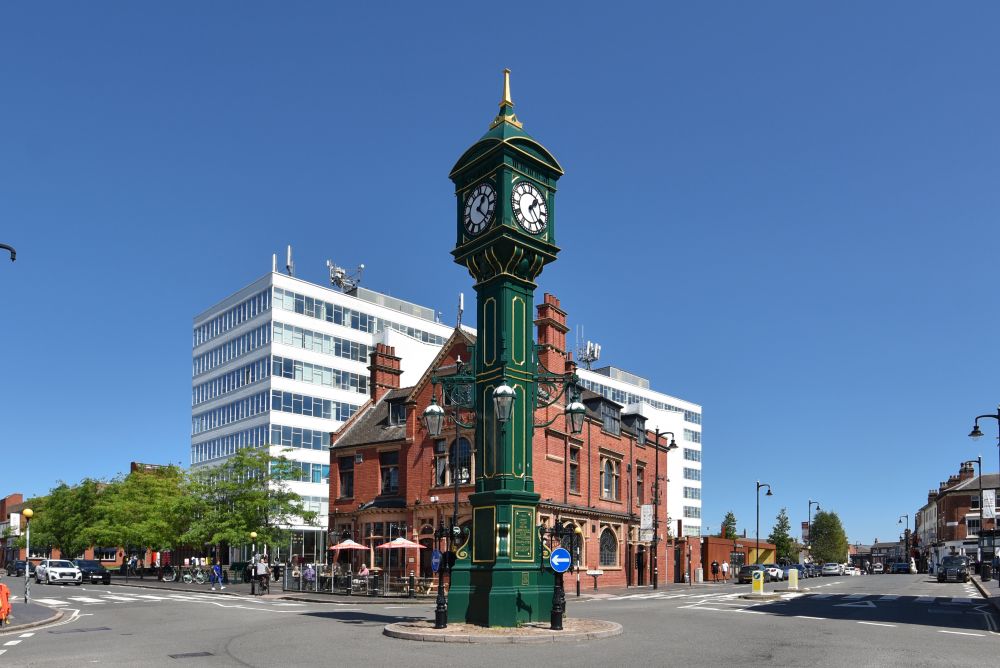
The Birmingham Assay Office was established in 1773, St Paul’s Church was consecrated in 1779. Industrialisation followed soon after the opening of the canal in 1789 and the jewellery trade exploded in the mid-1800s. Look carefully at many of the buildings around today and you can trace this history back through post-war factories and a ‘flatted factory’, Victorian and Edwardian silver and pewter works, right back to houses with jewellery workshops built in their back yards.
The Jewellery Quarter today is rare in that it is one of the only surviving places in the UK with its foundational industry still in place, but the area is more than just history. It is an area bursting with newer firms in digital technology, food and drink, fashion, web- and graphic design, architecture, and much more. The spirit of entrepreneurialism and creativity, baked into the orange-red bricks and the blue paving of these streets continues to influence today’s businesses.
Hand-in-glove with this is the Jewellery Quarter’s reputation as an outstanding place to live and visit. Close to the city core with great transport links ticks some of the requirements for city-living, but the differentiators are why so many people choose to make the Jewellery Quarter their home. A wide range of food – from your local café to fine dining, two coffee roasteries, three breweries and plentiful bars and pubs, all with a strong independent streak – help define the Jewellery Quarter today.
As do the countless places to see and do things. The Museum of the Jewellery Quarter, the Newman Brothers Museum at the Coffin Works, the Pen Museum and J W Evans all tell the history of the area, and people can get involved with a plethora of hands-on creativity from pottery to rug-making, and chocolate-making to art classes, music lessons, capoeira, and open mic nights. Film clubs, sports clubs and supper clubs really mean there is something for everyone.
The trade that named the place
If you’re a Brummie you kind of know the Jewellery Quarter is a special place, and if you’re new to Birmingham there’s a chance you’ve heard this. What few of us really appreciate is that it is a very special place. It’s distinctive to Birmingham, and it’s unique not just in the UK but globally.
This was recognised in May 2025 when Birmingham was awarded World Craft City status for Jewellery and Allied Trades by the World Crafts Council – a UNESCO-affiliated NGO which champions craft preservation, craft education, craft certification and creative economies worldwide. We were the 74th place globally to be awarded this status and the first designated for jewellery-making and allied trades such as silversmithing, goldsmithing, giftware, regalia and much more.
Following the application, led by the Jewellery Quarter Development Trust and Birmingham City University, and supported by Birmingham City Council and the Goldsmiths Company, the judging panel flew in from Mexico City, New Delhi and Melbourne. They spent three days exploring a trade that has been here for over 250 years. They looked at how it evolved with consumer tastes and how it uses the latest technology alongside traditional bench skills.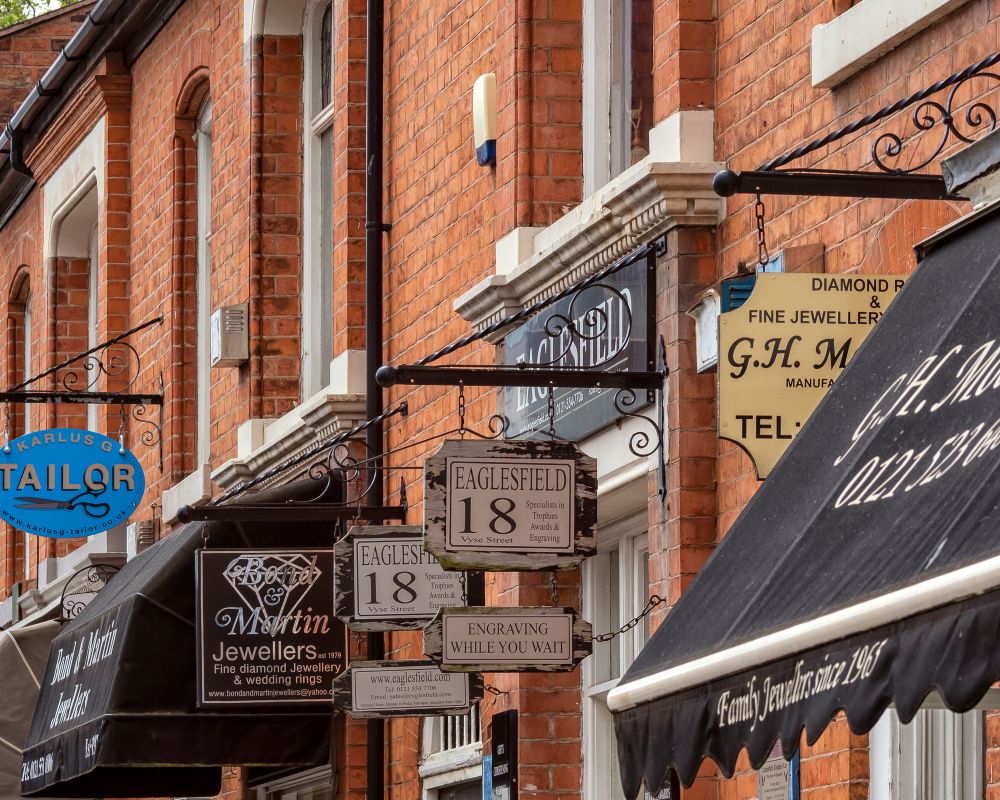
They were interested in the education pathways and infrastructure, and they learned about the future challenges and opportunities, particularly the need to bring in new talent. The judges also spent their time here enjoying the food and drink offering in the Jewellery Quarter – and were grateful of the good weather so they could walk off the generous hospitality!
As you walk around the Jewellery Quarter, the retailers you see are just tip of the iceberg. Behind closed doors hi-tech sits next to jeweller’s benches, and companies young and old supply royalty, celebrity and prestige marques the world over. In this industry alone, hundreds of businesses employing around 4,500 people generate approximately £750 million in revenue in our square mile of the city centre.
Birmingham Assay Office is the largest in the UK and the School of Jewellery is the largest in Europe, offering the widest range of courses in the world. The Crown Jewels were restored here before the Coronation.
The Wimbledon trophies and the Lonsdale Belt were made here. Civic regalia from across the UK comes from the Jewellery Quarter as do royal honours such as MBEs and OBEs. Silver candlesticks made on Albion Street sit in the Cabinet Room of 10 Downing Street.
King Charles III writes with a Jewellery Quarter pen, the Crown Prince of Jordan wore a Jewellery Quarter ceremonial sword at his wedding made and Beyonce sported a $200,000 pair of diamond-encrusted stilettos made – you guessed it – here in the Jewellery Quarter.
What makes the Jewellery Quarter extra-special internationally is not just the goods it produces, but that it’s an ecosystem that has all the constituent parts and infrastructure in-situ with many companies inter-reliant on each other. This is extremely rare.
However, there are challenges facing this ecosystem. Skills shortages and the average age of the workforce mean there is a danger of some of those skills being lost. Characterful architecture, walkable streets plus good food and drink attracts much-needed residential investment, but also drives up land and rental values, adding pressure to an already-tough business environment.
Bespoke, skilled and hand-crafted work offers more value in a world where AI and mass production dominate, and in times of upheaval, tradition provides stability. This is a huge opportunity for the digitally-savvy next generation of craftspeople and entrepreneurs who can reach audiences across the world.
Three long term solutions have been identified with action already underway to help the trade thrive for the next 250 years:
The ethos of collaboration is part of the response to these challenges.
Epilogue
When they arrived, the World Craft City judges didn’t know much about Birmingham and the West Midlands. However, when we talked to them about Boulton and Watt, Jaguar Land Rover, Cadbury’s, GKN and Lucas Engineering, Triumph and BSA, they couldn’t fathom why we weren’t shouting it from the rooftops. In true Brummie style we brush over the specialness – the ‘genius loci’ – of places like the Jewellery Quarter, preferring instead to talk about the traffic or football or the bins. This very local trait was spotted by the judges and while they viewed it as endearing, they also felt it was their job to hold a mirror up and show us just how important our city is.
Let’s heed their advice. Let’s speak loudly and confidently about Birmingham and our neighbours. Let’s celebrate the things that make the city unique, and let’s invest time, effort and money in that uniqueness. When competing for national and international investment and tourism, ‘interesting and specific’ garners more attention than ‘bland and generic’.
Our place in history is secure due to the Industrial Revolution, but our future is still up for grabs. We excel at engineering and finance. Our diversity means our creative, culinary and cultural offering can be second-to-none. Ditto film, TV and gaming.
Of course we will be talking about our reputation for jewellery and allied trades. Say it quietly but we might even be able to talk about football in the same context.
*Matthew Bott is the current chair of the Jeweller Quarter Development Trust. Established in 2011, the JQDT is a volunteer-led, not-for-profit Community Interest Company set up to deliver improvements to the Jewellery Quarter. For more information see www.jqdt.org
5000th contract begins
Second major investment of the year
Seven new jobs created